Enable additional event logs using Event Viewer

For the following event IDs, the auditing setup is configured using the Windows Event Viewer. Access the Event Viewer through the search box in the Start menu.
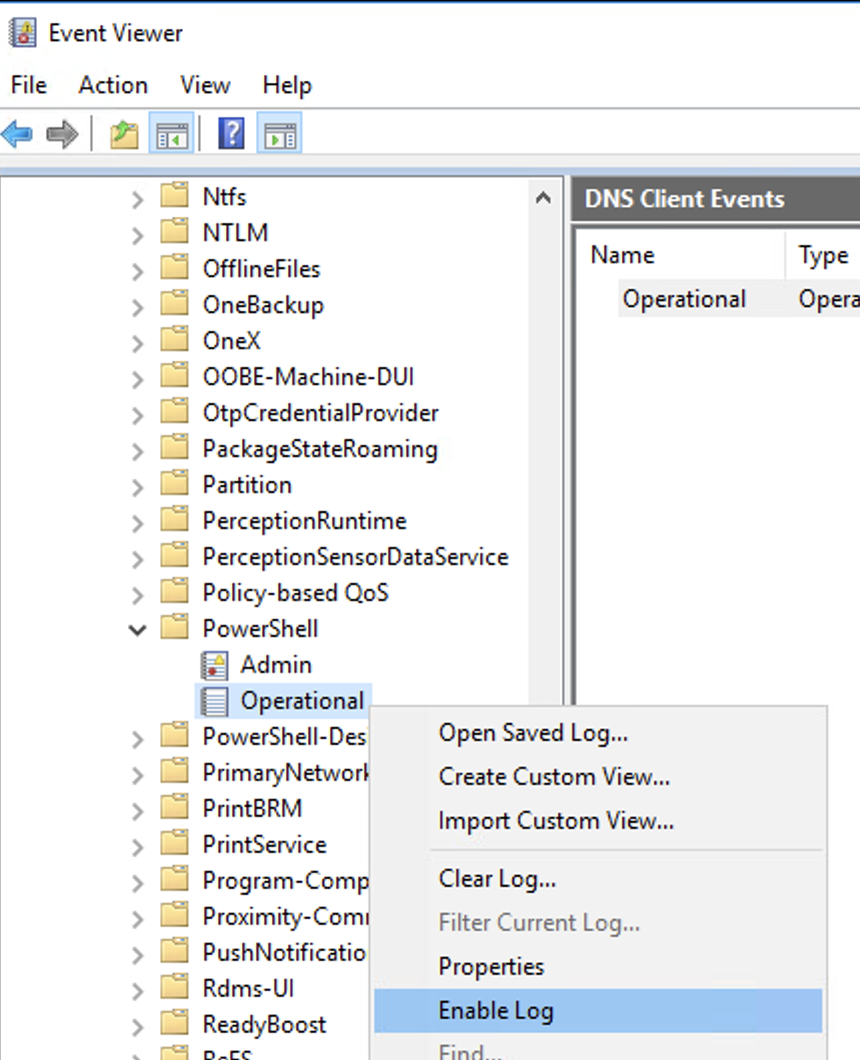
image34.png
Event IDs 1511, 1518

In Event ViewerExpand Applications and Services LogsMicrosoftWindowsUser Profile Service, right click Operational and select Enable Log.
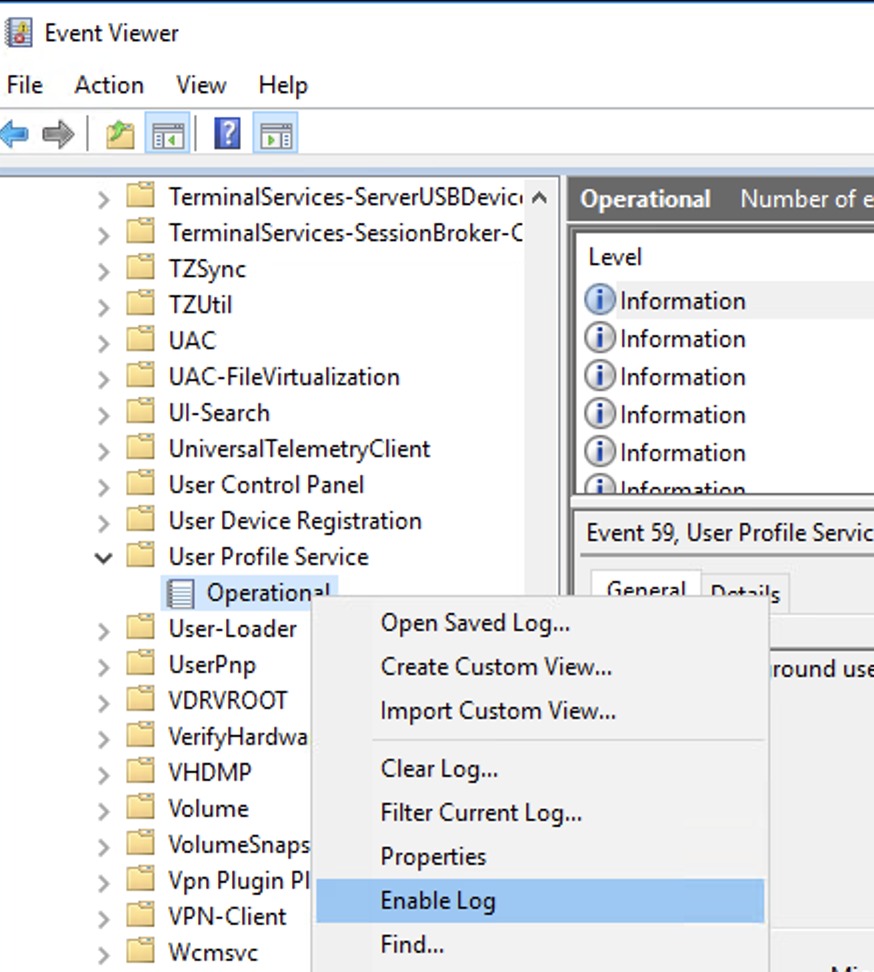
image22.png
Event IDs 11, 70, 90

In Event ViewerExpand Applications and Services LogsMicrosoftWindowsCAPI2, right click Operational and select Enable Log.
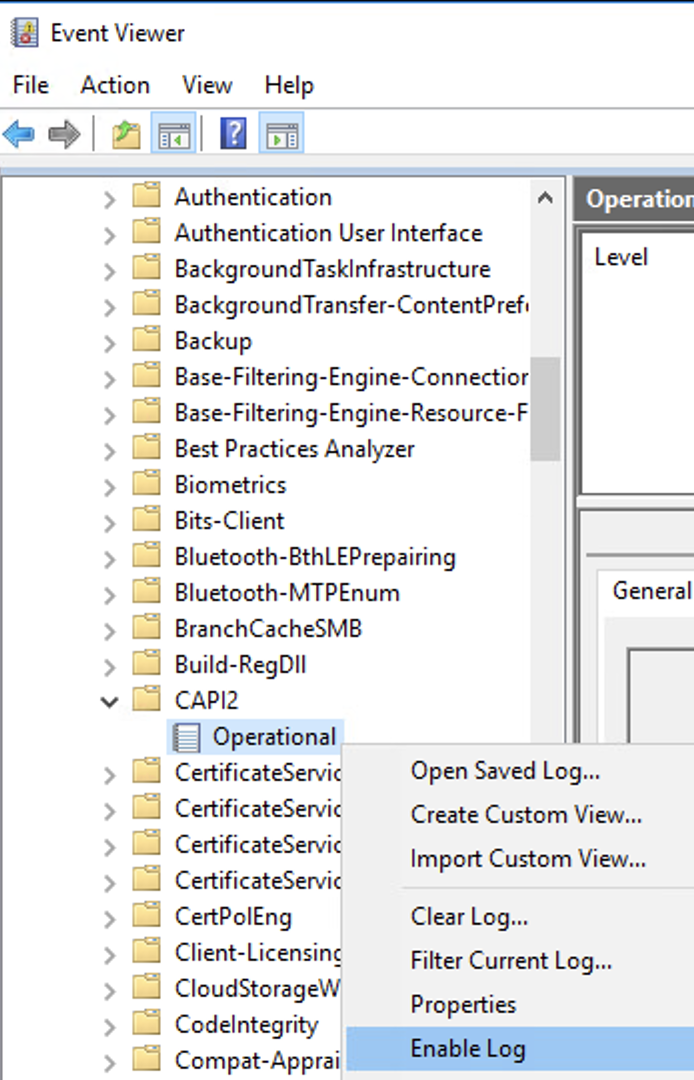
image36.png
Event ID 3008

In Event ViewerExpand Applications and Services LogsMicrosoftWindowsDNS Client Events, right click Operational and select Enable Log.
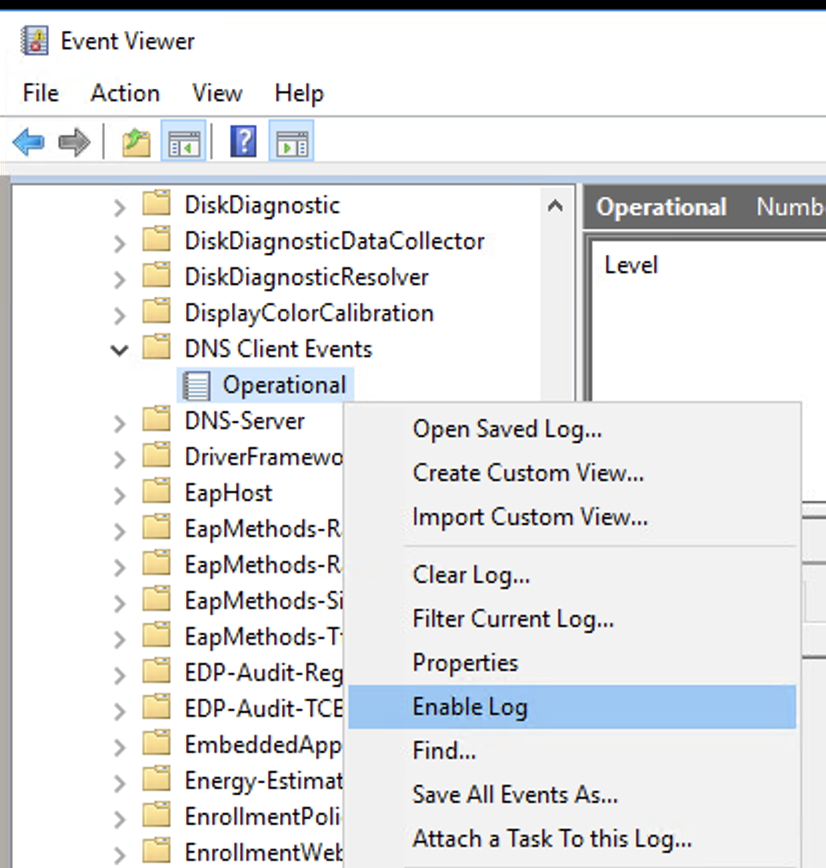
image33.png
Event ID 2004

In Event ViewerExpand Applications and Services LogsMicrosoftWindowsDriverFrameworks-UserMode, right click Operational and select Enable Log.
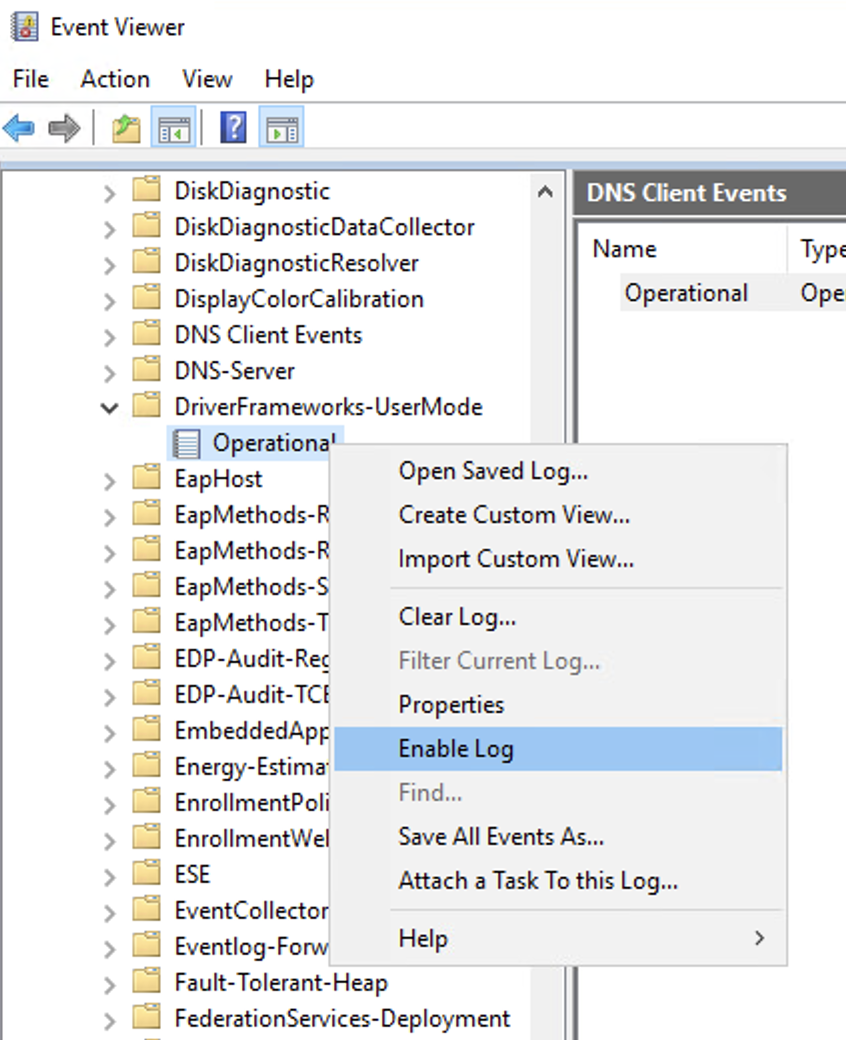
image28.png
Event IDs 4103, 4104, 4105, 4106

In Event ViewerExpand Applications and Services LogsMicrosoftWindowsPowerShell, right click Operational and select Enable Log.
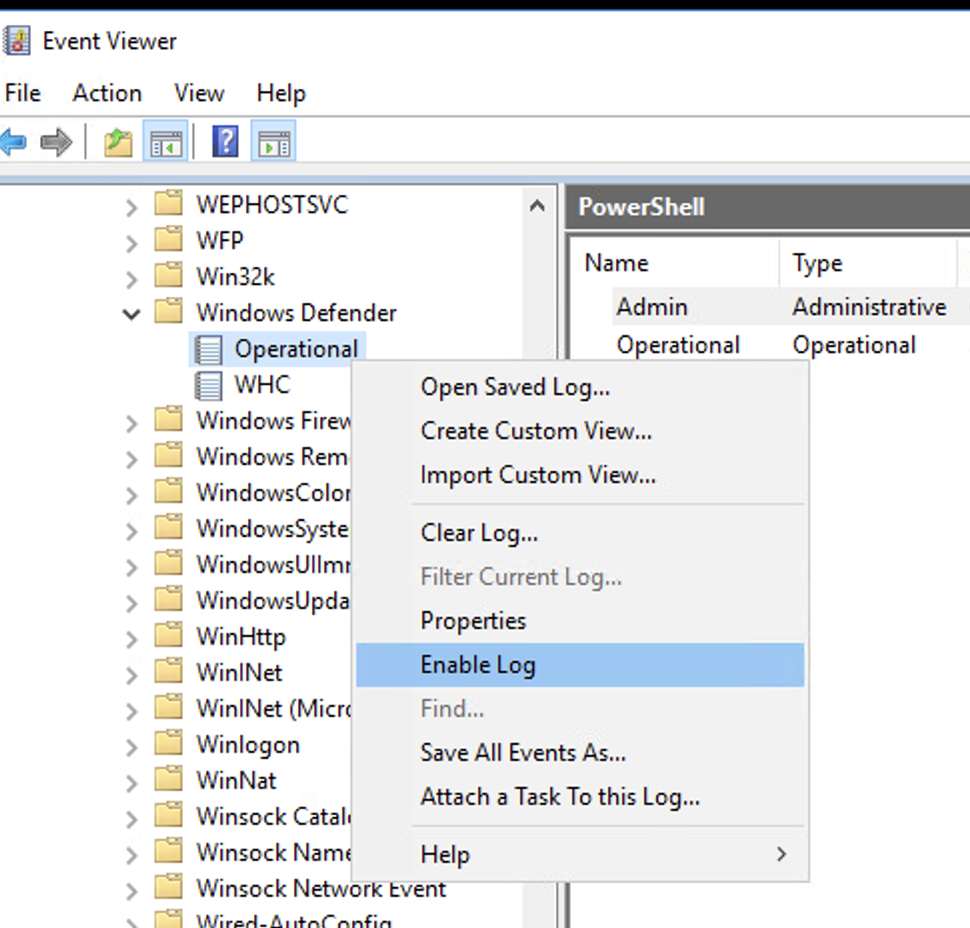
image31.png
Event IDs 1006, 1009, 1116, 1119

In Event ViewerExpand Applications and Services LogsMicrosoftWindowsWindows Defender, right click Operational and select Enable Log.
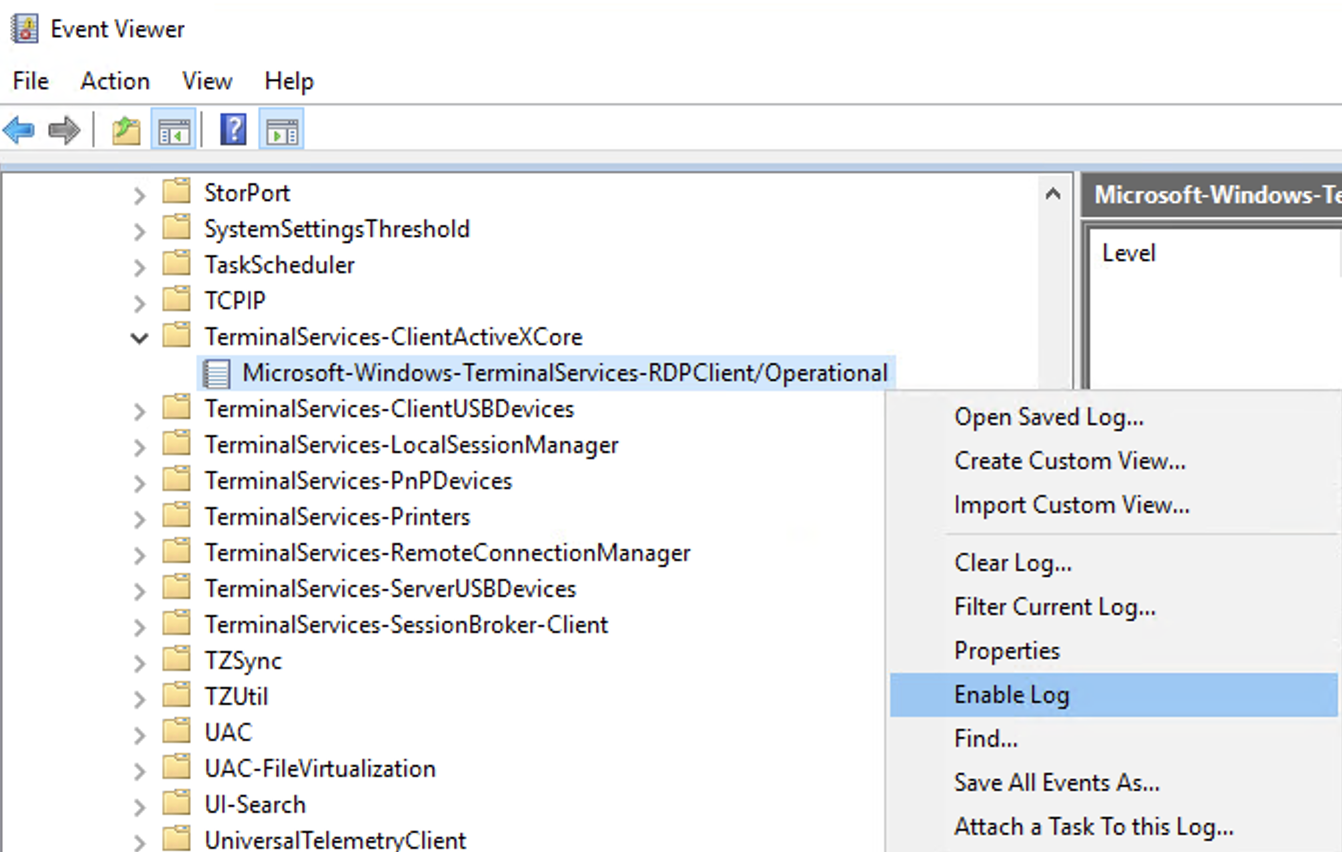
image35.png
Event ID 1024

In Event viewerApplication and Services LogsMicrosoftWindowsTerminalServices-ClientActiveXCoreMicrosoft-Windows-TerminalServices-RDPClient, right click Operational and select Enable Log.
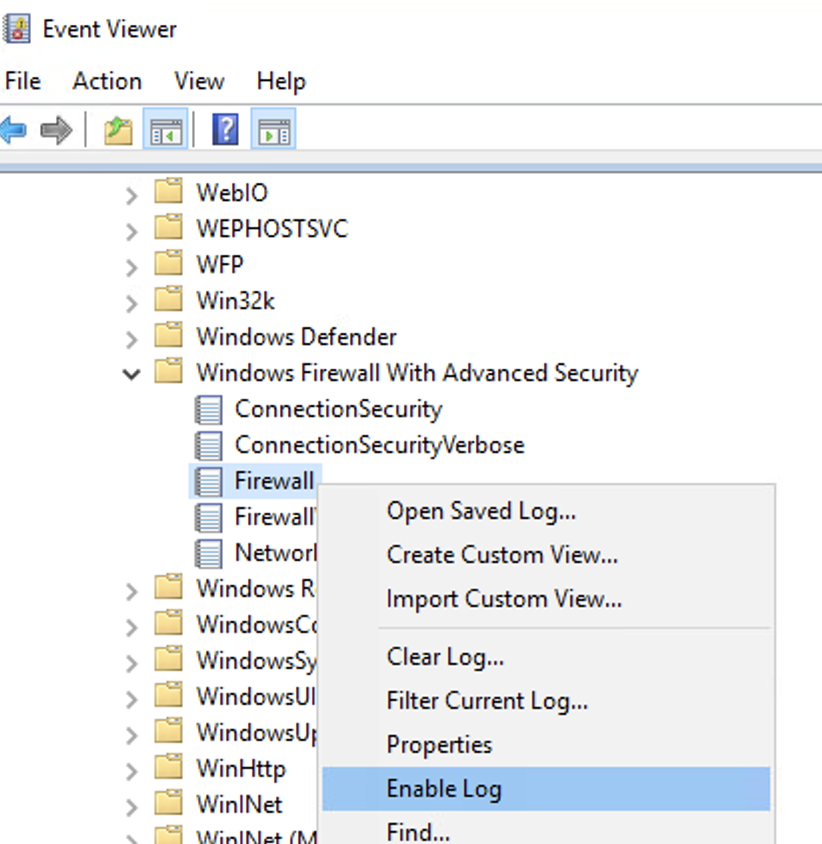
image30.png
Event IDs 2005, 2006, 2009, 2033

In Event ViewerExpand Applications and Services LogsMicrosoftWindowsWindows Firewall With Advanced SecurityFirewall, right click Operational and select Enable Log.

image17.png