SaaS Security Overview ↗
The SaaS Overview dashboard provides unified visibility into your multi-SaaS security posture to streamline daily operations. The dashboard seamlessly aggregates and presents security data from all four core SaaS Security pillars including: SaaS Security Posture Management, SaaS Identity Security, SaaS Data Security, and SaaS Agent Security. Leverage this view to:
- Triage Threats: Detect and investigate active security events in real time.
- Manage Posture: Surface and prioritize misconfigurations across connected applications and assets.
- Provide Executive Reporting: Track aggregate risk scores and compliance trends for stakeholder updates.
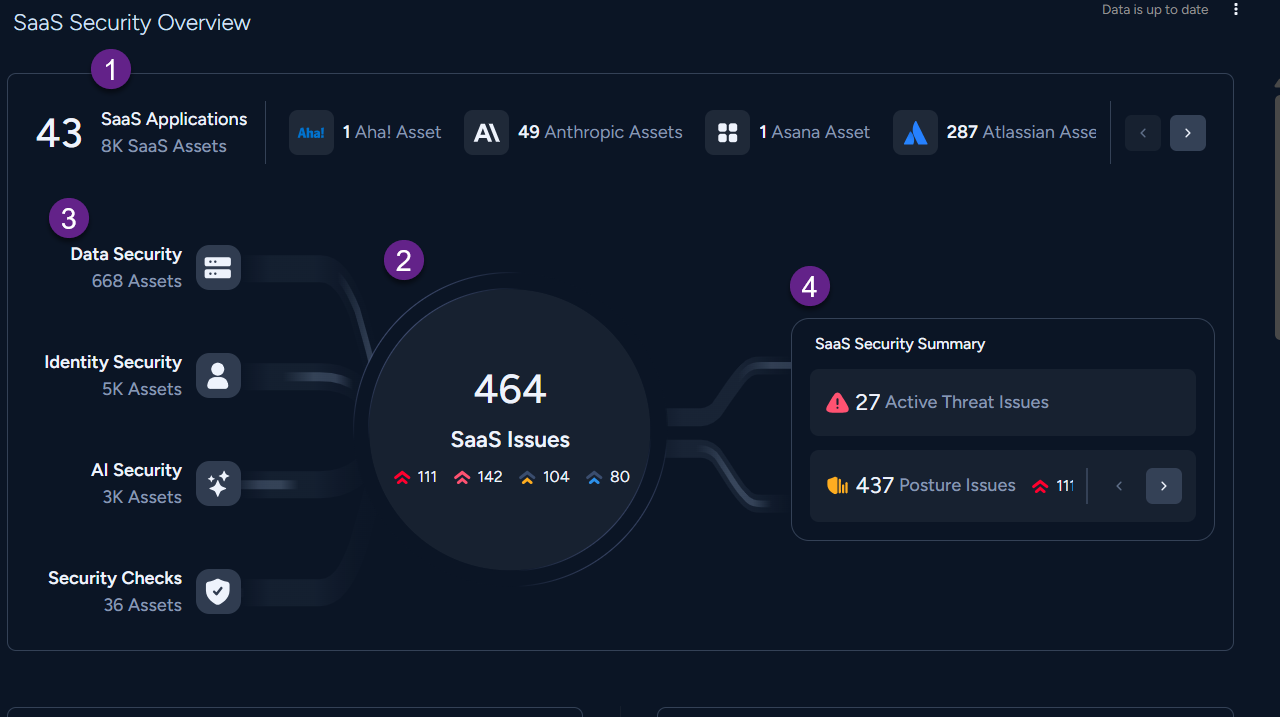
Review the descriptions below for a detailed breakdown of interactive widgets:
- The application inventory header bar displays high-level statistics for monitored applications and assets along with state sync indicators. This high-level indicator provides you with a comprehensive view of all your SaaS applications and impacted assets.
- The central interactive visual graph maps security domains to aggregated issues and severity classifications. This helps you gauge the overall health of your security operations and ensure that your team is maintaining a positive burn-down rate of vulnerabilities.
- Domain Security Nodes: Hover over or click a domain node to highlight tracked vulnerability data, such as Agents with Sensitive Data, and view domain-specific asset inventories.
- Summarizes Findings into two operational buckets:
- Active Threat Issues
- Posture Issues
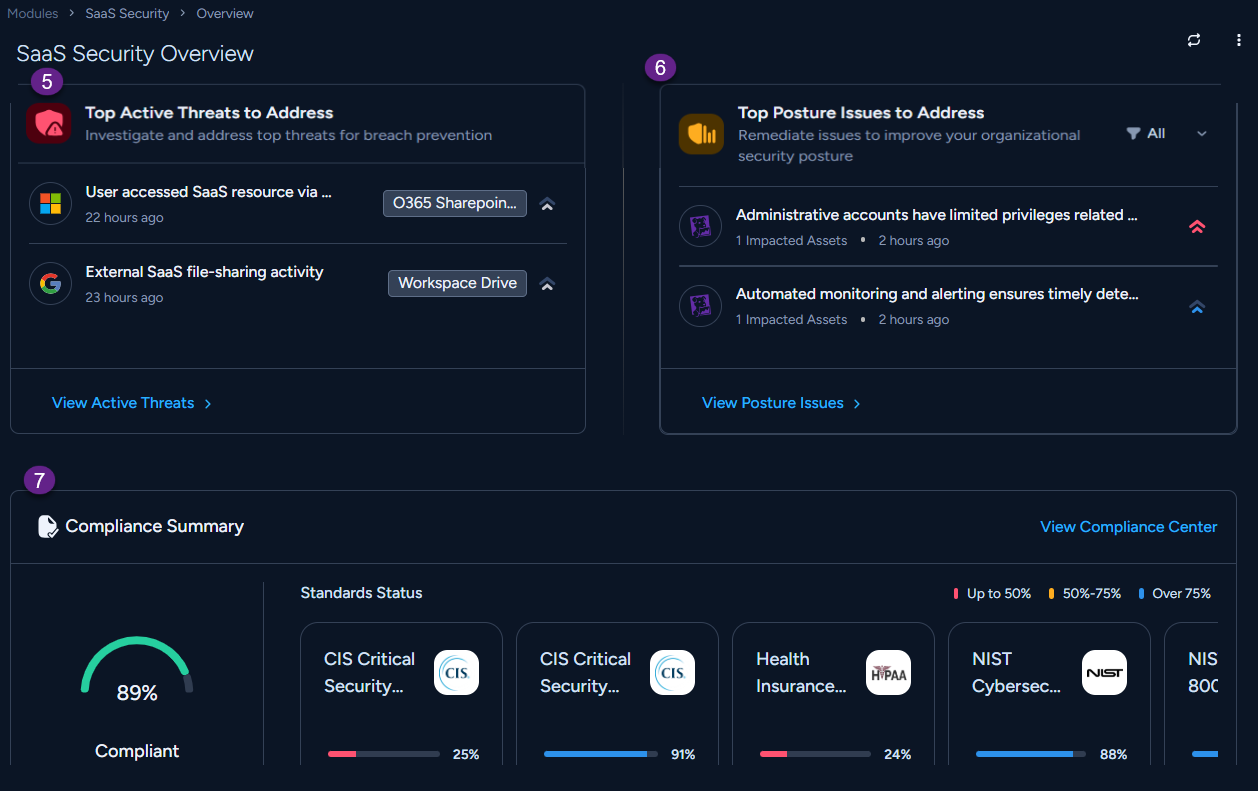
- Top Active Threats to Address: Displays a prioritized list of specific threat alerts to help you identify and investigate high-risk activities that could lead to a breach.
- Top Posture Issues to Address: Lists the most critical configuration issues and vulnerabilities, categorized by asset type (Data, Identity, API) and the number of impacted assets, to help your team remediate the most widespread risks to your organization’s security posture.
- Compliance Summary: Tracks compliance percentage across specific global standards, to help you report out regulatory readiness to stakeholders and prioritize efforts to close specific compliance gaps.