Endpoint protection ↗
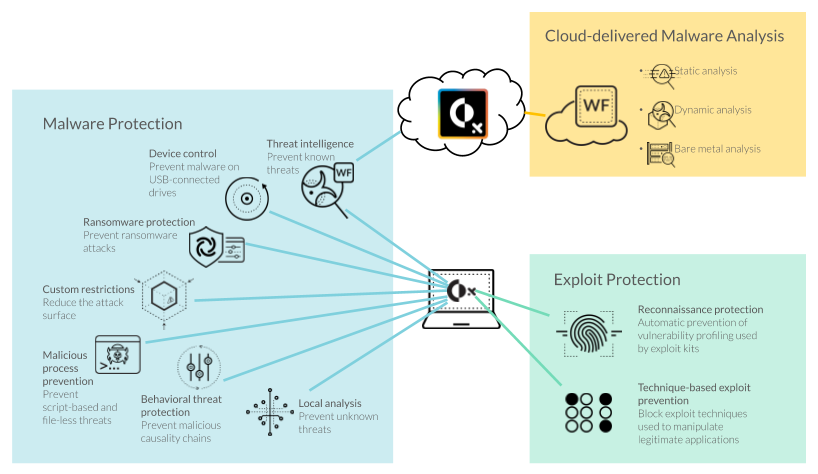
Cortex XSIAM endpoint protection uses the Cortex XDR agent to prevent malware, exploits, and zero-day threats. It combines endpoint security controls with AI analysis to stop attacks before they execute.
How endpoint attacks work
Cyberattacks target endpoints to steal data, disrupt operations, or gain system control. Attackers can trick users into running malicious executable files, known as malware. They can also exploit vulnerabilities in legitimate applications to run code without user knowledge.
Limits of traditional antivirus
Traditional signature-based antivirus (AV) compares files, dynamic-link libraries (DLLs), and other code against known threat signatures. New threats remain undetected until signatures are created and distributed. This delay leaves endpoints exposed to zero-day malware and exploits.
Cortex XSIAM malware and exploit protection
Cortex XSIAM endpoint protection uses a multi-method prevention approach. Exploit protection modules block attacks against software vulnerabilities. Malware protection modules inspect executable files, DLLs, and macros for malicious signatures and behavior.
Together with AI analysis, these controls prevent known and unknown threats at attack entry points. This approach reduces reliance on traditional antivirus and improves endpoint security.